7 signs of a broken sewer line, and what to do
How to tell a main sewer line problem from a single clogged drain, and when to call.
Short answer: the clearest sign of a broken or blocked sewer line is that several drains act up at once. One slow sink is a local clog. Every drain slow, toilets gurgling and water coming up the tub point to the main line.
1. Several drains are slow at the same time
All your drains share one main line. When the kitchen, bathrooms and laundry all slow down, the problem is downstream of all of them.
2. Toilets gurgle or bubble
Gurgling when another fixture drains means air is being pushed back through the system by a partial blockage.
3. Water comes up the tub or shower
The tub or shower is often the lowest drain, so sewage shows up there first when the main is blocked. Stop using water and see emergency sewer backup.
4. Sewage smell inside or outside
A sewer line that is cracked lets gas escape into the soil and sometimes into the house. A persistent smell is worth a camera inspection.
5. A soggy or extra-green patch in the yard
A broken lateral leaks into the soil. Look for a wet spot or a strip of greener grass along the sewer route between the house and the street.
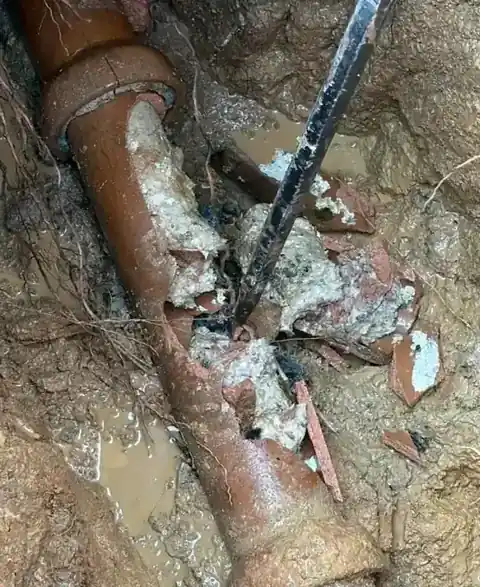 Roots break open old clay pipe at the joints.
6. Recurring clogs
If the line has to be cleared every few months, something keeps catching debris: usually roots, an offset joint or a sag.
7. Rodents or insects
Rats and roaches can get in through broken sewer pipe. Unexplained pests along with other signs are a reason to scope the line.
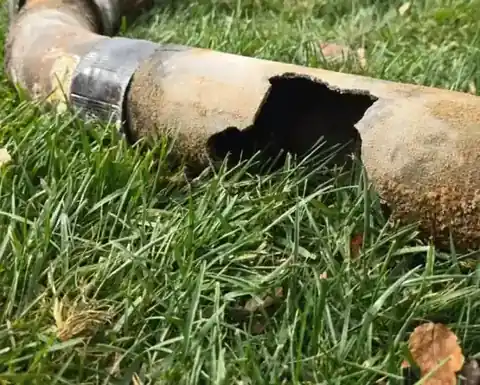 A pipe this damaged leaks into the soil long before it backs up.
Is it the main line or just one drain?
Before you call about the sewer line, rule out a simple clog. A main line problem affects the whole house. A single drain problem stays in one room.
| What you see | Most likely |
|---|---|
| One sink or one toilet is slow, the rest are fine | A clog in that fixture or its branch line |
| Toilet flush makes the tub or shower drain bubble or back up | Main sewer line |
| Washing machine drains and water comes up a floor drain or tub | Main sewer line |
| Sewer smell in one bathroom that is rarely used | A dry trap: run water for a minute and see if it stops |
| Every drain slow, worse in the morning when everyone showers | Main sewer line, often roots |
A safe two-minute check at the cleanout
Most homes have a sewer cleanout: a short pipe with a screw cap near the house or close to the front yard. It gives you a quick clue.
- Stop all water use in the house.
- Put on gloves and slowly loosen the cap a little. Stand to the side.
- If water or sewage rises in the pipe or seeps out of the cap, the blockage is downstream in the main line. Tighten the cap and call.
- If the cleanout is dry, the problem may be inside the house, between the fixtures and the cleanout.
Do not open the cap all the way if it is under pressure. And never put chemical drain cleaner into a main line. It rarely clears roots, and it is dangerous for the plumber who opens the line next.
Why these signs are common in Torrance homes
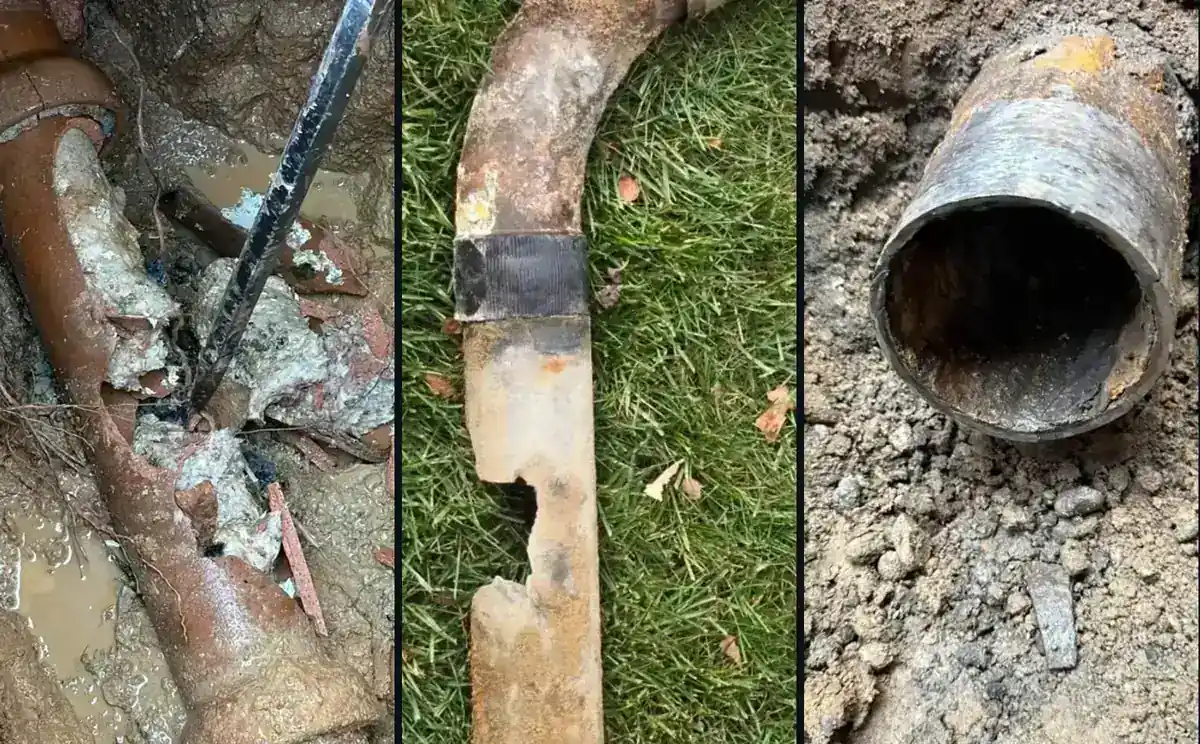
Much of Torrance was built in the 1950s and 1960s. Many of those homes still have their original clay sewer lateral and cast iron drains under the slab. Clay joints let roots in, cast iron builds scale and cracks, and decades of ground movement can shift joints out of line. So when a Torrance home shows two or more of the signs above, the cause is often in the lateral between the house and the street.
A sewer camera inspection finds the exact spot and depth. Then you can compare costs in our sewer line repair cost guide and check who pays for which part of the line.
What to do next
- If sewage is coming up, stop all water use and call for clearing.
- If the signs are slower, book a sewer camera inspection to find the cause.
- Use the footage to choose the fix: a spot repair, trenchless lining or replacement.
In Torrance? Start with sewer line repair in Torrance.